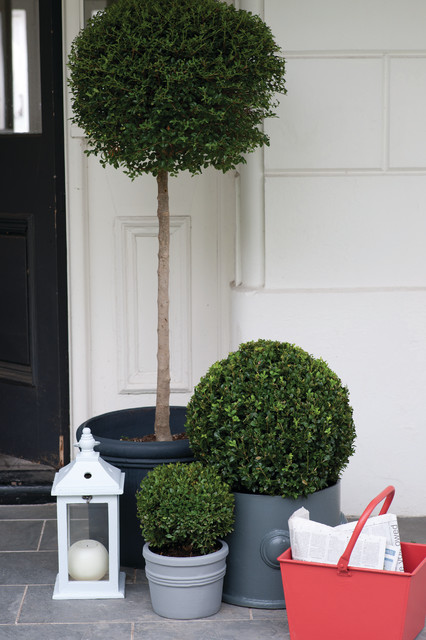
(Buxus spp.)Whether used as a container plant, bed-edger, taller hedge plant or accent, the humble boxwood offers endless versatility in gardens and, being an evergreen, year-round interest. For containers and edgers, choose dwarf varieties that naturally stay smaller. In cold-winter regions, look for Korean boxwood (B. sinica var. insularis) which is the most cold-hardy (down to Zone 4). In areas where boxwood blight is on the rise, opt for other evergreens, such as pittosporum, privet, yew and dwarf conifers, to serve a similar design function.Where it will grow: Hardy to minus 25 degrees Fahrenheit, or minus 31.7 degrees Celsius (zones 4 to 9), depending on variety
Origin: Wide native range, including parts of Europe, Asia, Africa, North and Central America
Water requirement: Moderate to low; drought tolerant once established
Light requirement: Partial shade to full sun
Mature size: Can reach about 10 feet tall and 10 feet wide, but very slow growing
Seasonal interest: Year-round foliage
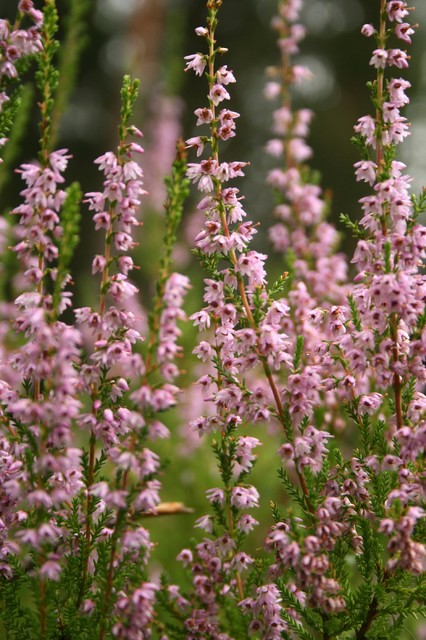
(Erica spp. and Calluna spp.)Cold-hearty heaths (Erica spp.) and heathers (Calluna spp.) bloom from late summer through early winter in their natural settings, but you’ll often find greenhouse-grown plants blooming through winter. Try them as potted plants to brighten window boxes and doorstep arrangements through the holidays. Flowers fade once the bloom is finished, but they look nearly as attractive when left on the plant as dried flowers.Where it will grow: Hardy to minus 25 degrees Fahrenheit, or minus 31.7 degrees Celsius (zones 4 to 10)
Origin: Wide native range, including Africa, Madagascar, the Mediterranean and Europe
Water requirement: Regular
Light requirement: Full sun
Mature size: Varies from ground cover to 3 feet tall
Seasonal interest: Flowers from late summer through early winter
(Symphoricarpos albus)
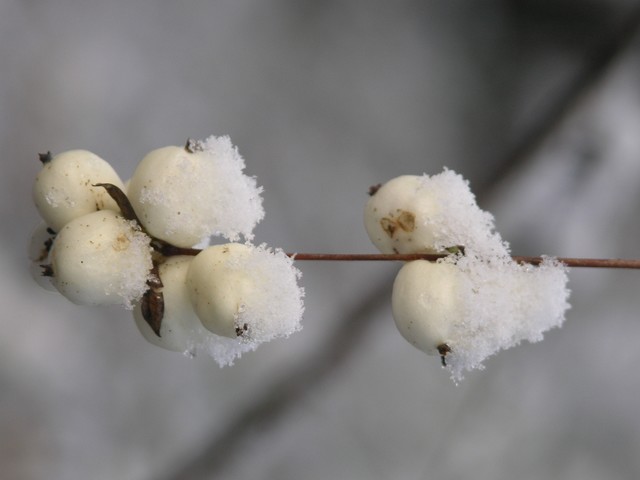
Whereas winterberry has bright, colorful berries, those of snowberry are pale as pearls but are no less beautiful in the winter landscape. Plants have a loose, shrub-like form with arching lateral branches. It works best as part of mixed hedges or in less-formal areas of the garden, where branches covered with berries can be admired against winter evergreens.
Where it will grow: Hardy to minus 25 degrees Fahrenheit, or minus 31.7 degrees Celsius (zone 4 to 10)
Origin: Native to western and eastern North America, including Canada
Water requirement: Moderate; low once established
Light requirement: Light shade to sun
Mature size: 3 to 6 feet tall and wide
Seasonal interest: Pink flowers in summer, white berries in winter
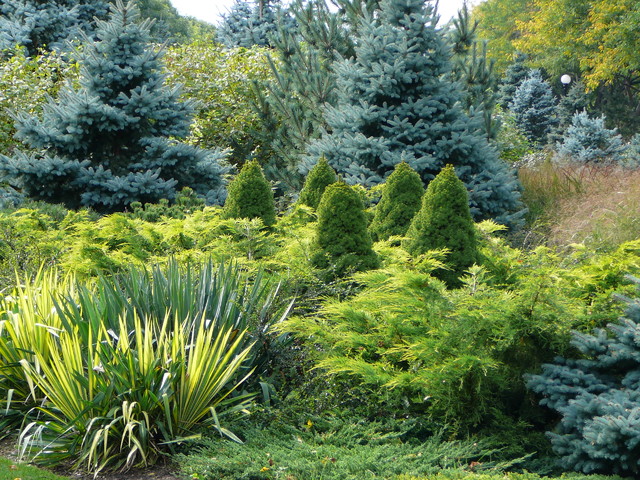
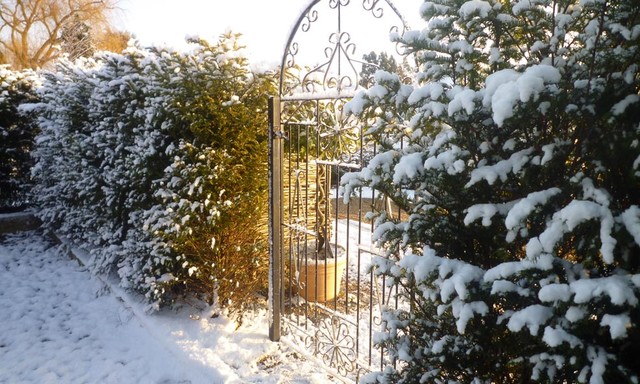
5. ConifersConifers are all-stars in the winter garden, with evergreen needles that look lovely when flocked with snow or frost. Choose among different types of conifers, such as fir, pine, spruce, cypress, juniper, cedar, redwood, yew and more, in a wide variety of colors and forms. Dwarf varieties are often more garden-sized than full-scale pines or redwoods and are always the best choice for containers.
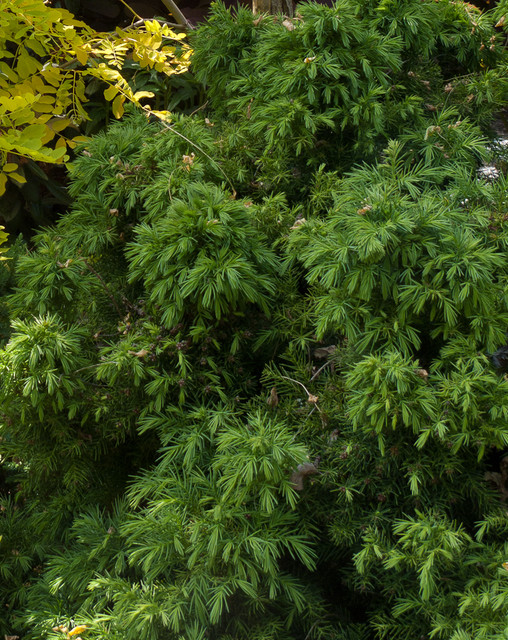
Keep your eyes peeled for the following conifers: dwarf mugo pine (Pinus mugo var. pumilio, zones 3 to 7) for a dark-green gumdrop form; blue spruce (Picea pungens, zones 3 to 7) for stunning silvery-blue needles; and more cold-tender ‘Wilma Goldcrest’ Monterey cypress (Cupressus macrocarpa ‘Wilma Goldcrest’, zones 7 to 10) for bright chartreuse foliage on the compact container plant.
Where it will grow: Hardiness varies by species
Water requirement: Varies; generally moderate to low
Light requirement: Varies; generally full sun
Mature size: Varies widely
Seasonal interest: Evergreen foliage
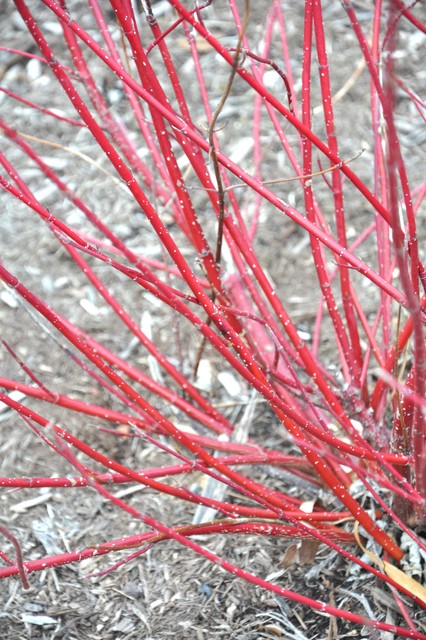
(Cornus sericea syn. Cornus stolonifera)While an attractive shrub year-round, redtwig dogwood really steals the show in winter. Fiery red twigs stand out in winter landscapes and can also be clipped to bring indoors for winter arrangements. While the straight species is known to spread laterally, cultivars that spread less often work best in garden settings. Plants are very cold-tolerant and adaptable to heavy and wet soils.Where it will grow: Hardy to minus 45 degrees Fahrenheit, or minus 42.8 degrees Celsius (zones 2 to 9)
Origin: Native to much of North America
Water requirement: Moderate
Light requirement: Full sun to partial shade
Mature size: 7 to 9 feet tall and spreading up to 12 feet wide
Seasonal interest: Year-round, but known for its bare, bright red stems in winter.
(Viola spp.)
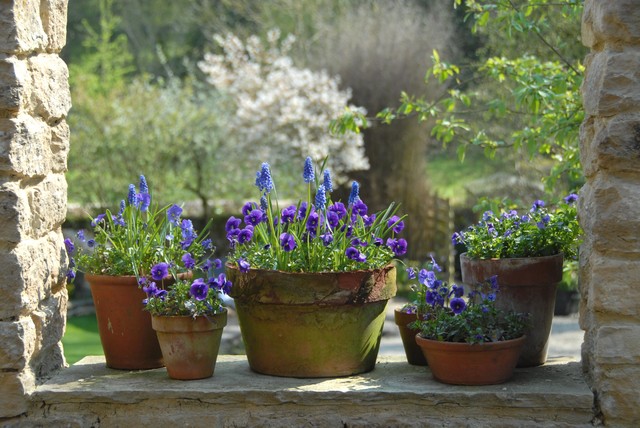
Pretty pansies provide bright spots of color for beds and container gardens, blooming in late fall and early spring in colder climates, and through winter in mild locations. Try them mixed with Iceland poppies (Papaver nudicaule), cyclamen or covering pots of bulbs planted in fall. If you live in a cold-winter climate and missed planting pansies in fall, wait until spring to plant.
Where it will grow: Hardy to 0 degrees Fahrenheit, or minus 17.8 degrees Celsius (zones 7 to 11) in winter; zones 6 and lower in summer
Water requirement: Regular; keep soil moist
Light requirement: Full to partial sun
Mature size: Up to 9 inches tall and wide
Seasonal interest: Flowers fall, winter and spring, depending on climate
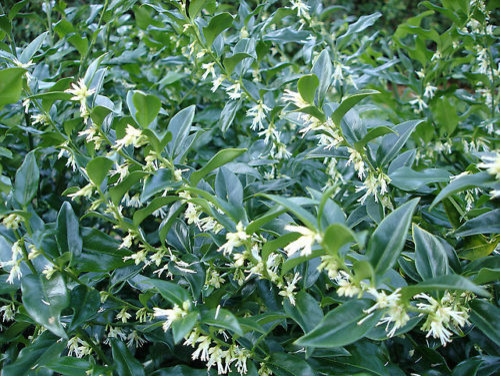
(Sarcococca ruscifolia)You’ll generally smell the fragrance of sweet box in winter or early spring before you spot the small cream-colored flowers hanging from the undersides of the stems. The deep green, leathery leaves look attractive year-round and are often used by florists as long-lasting cut greenery.
Where it will grow: Hardy to 0 degrees Fahrenheit, or minus 17.8 degrees Celsius (zones 7 to 9)
Origin: Native to China
Water requirement: Moderate
Light requirement: Partial to full shade
Mature size: Grows slowly to 3 to 5 feet tall and wide
Seasonal interest: Evergreen foliage and fragrant winter to spring blossoms
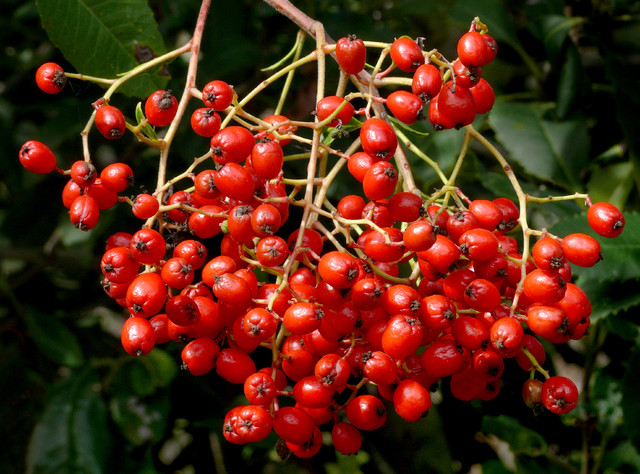
(Heteromeles arbutifolia)Aptly referred to as California Christmas berry or California holly, this West Coast native shrub-tree produces brilliant berries in fall that cling to the branches all winter, dotting the hills with color. Some say it’s toyon that gave Hollywood its name. Toyon suits native and more-casual gardens, where its natural shrubby form has room to breathe; plants can also be pruned into stunning multitrunk specimen trees. Berries provide a winter food source for wild birds. Plants are also considered to be fire-retardant.Where it will grow: Hardy to 0 degrees Fahrenheit, or minus 17.8 degrees Celsius (zones 7 to 10)
Origin: Native to California
Water requirement: Moderate to low; drought tolerant once established
Light requirement: Full to partial sun
Mature size: Dense shrub 6 to 10 feet tall; broad or multitrunk tree 15 to 25 feet tall
Seasonal interest: Evergreen foliage, summer flowers, berries in fall and winter
 Hadrych Properties
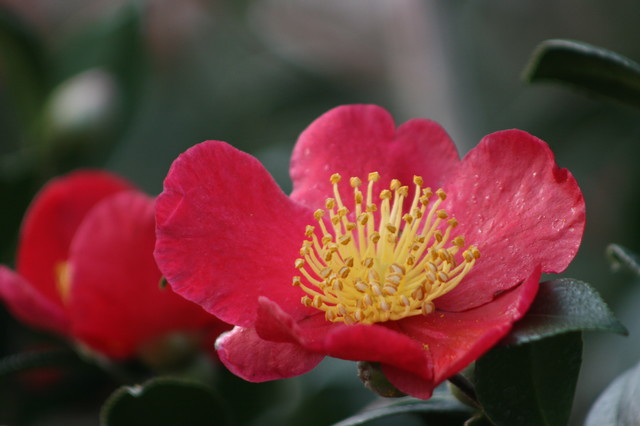
(Camellia japonica and C. sasanqua)The grand dames of the winter garden, camellias offer dignified foliage and showy flowers in wintery reds, whites and pinks — just when many other plants enter dormancy. Many varieties — particularly C. japonica — bloom from fall through the holidays, and often into early spring. For a holiday centerpiece, float cut blossoms in a low bowl of water with floating candles.Where it will grow: Hardy to 0 degrees Fahrenheit, or minus 17.8 degrees Celsius (USDA zones 7 to 9; find your zone); some newer hybrids are hardy to minus 10 degrees Fahrenheit, or minus 23.3 degrees Celsius (Zone 6)
Origin: Native to southern and eastern Asia
Water requirement: Moderate to regular; allow soil to dry out between waterings
Light requirement: Light shade but can tolerate morning sun; sasanqua camellia (C. sasanqua) tolerates more sun
Mature size: From 2 to 20 feet tall; most range from 6 to 15 feet tall and 5 to 10 feet wide
Seasonal interest: Flowers in fall and winter